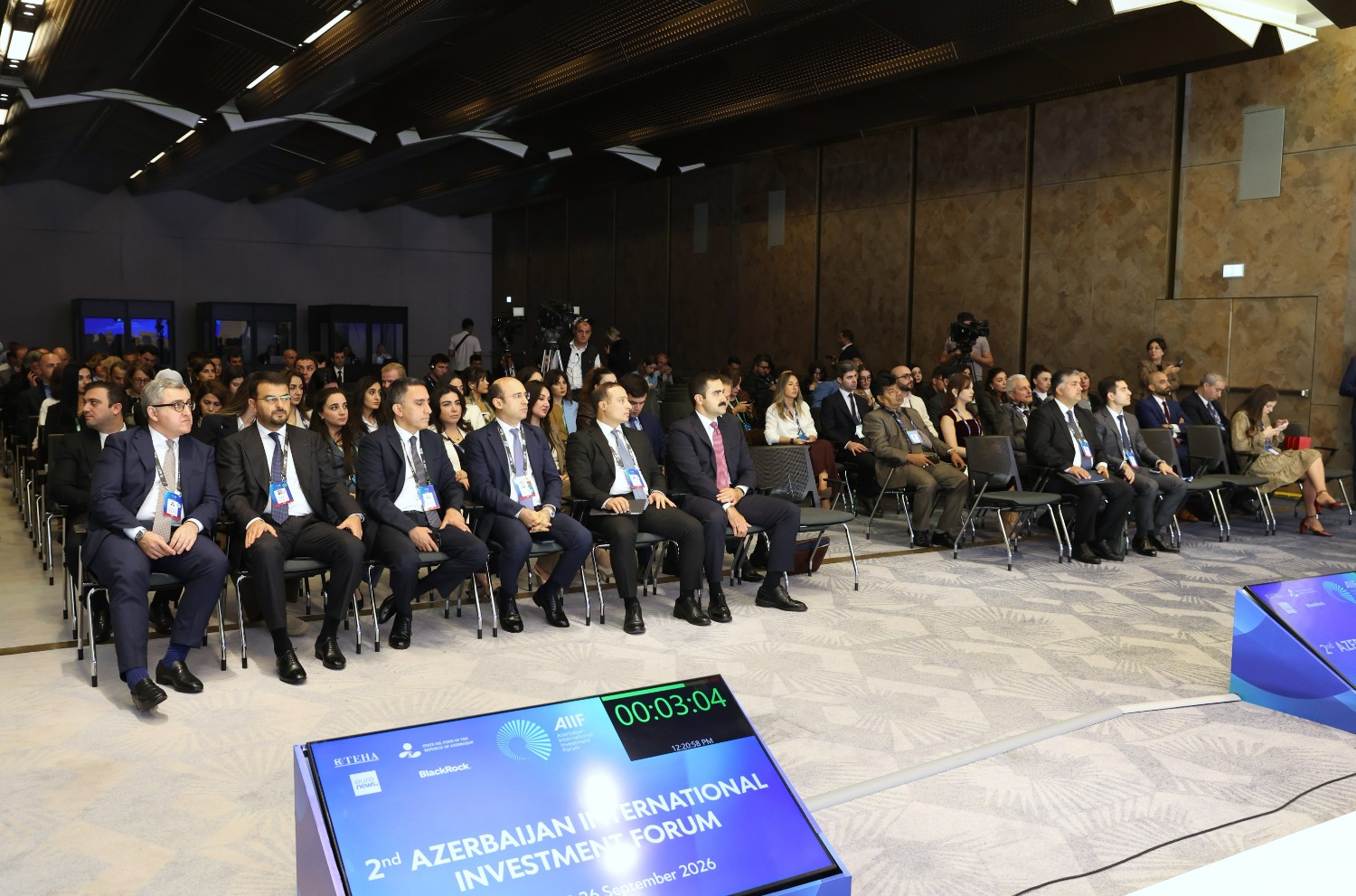
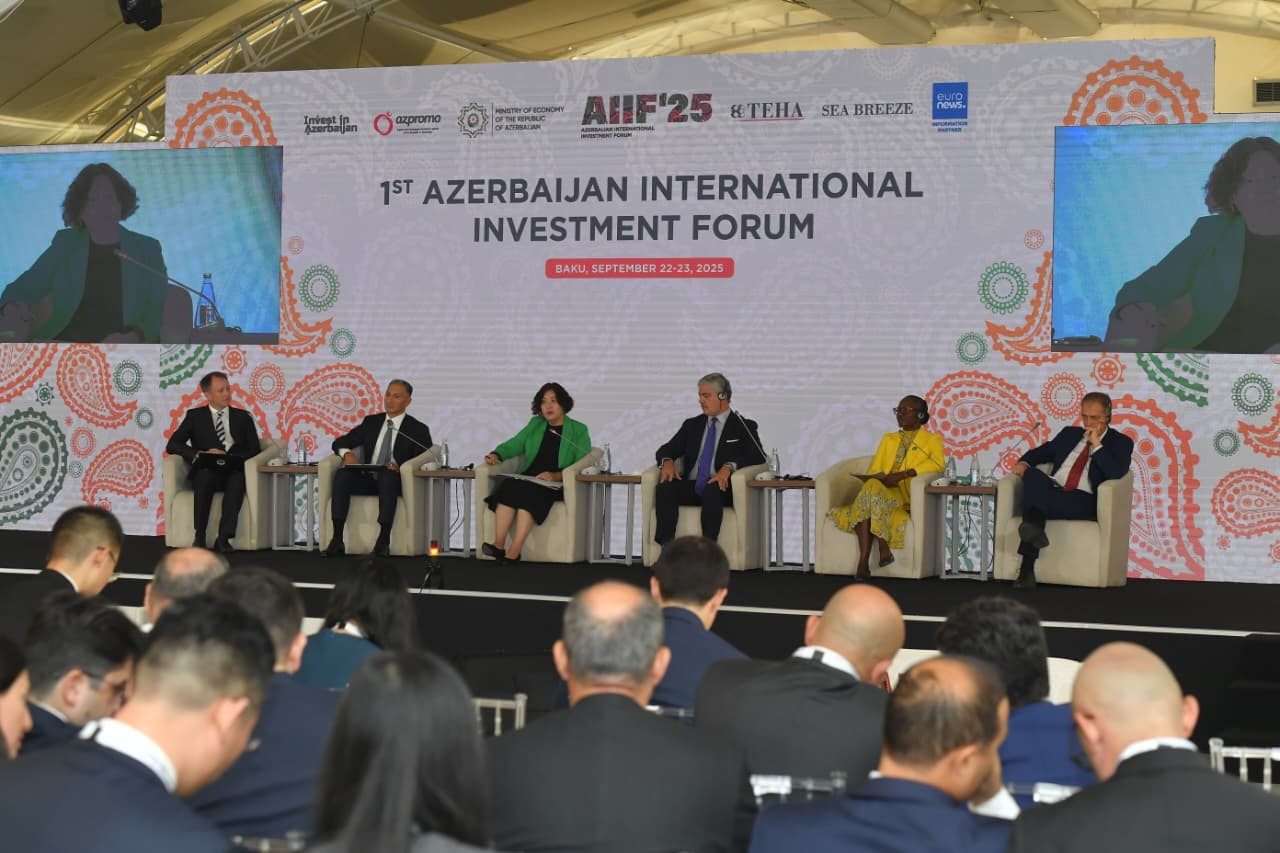
A panel session was held on the strategic importance of the South Caucasus and Central Asia amid global changes and the role of emerging regions in international relations.
The panel session, titled “Strategic Hubs in the Context of Global Changes,” took place within the framework of the First Azerbaijan International Investment Forum held in Baku under the patronage of President of the Republic of Azerbaijan Ilham Aliyev.
The session brought together government officials, experts from leading global think tanks, and representatives of international organizations.
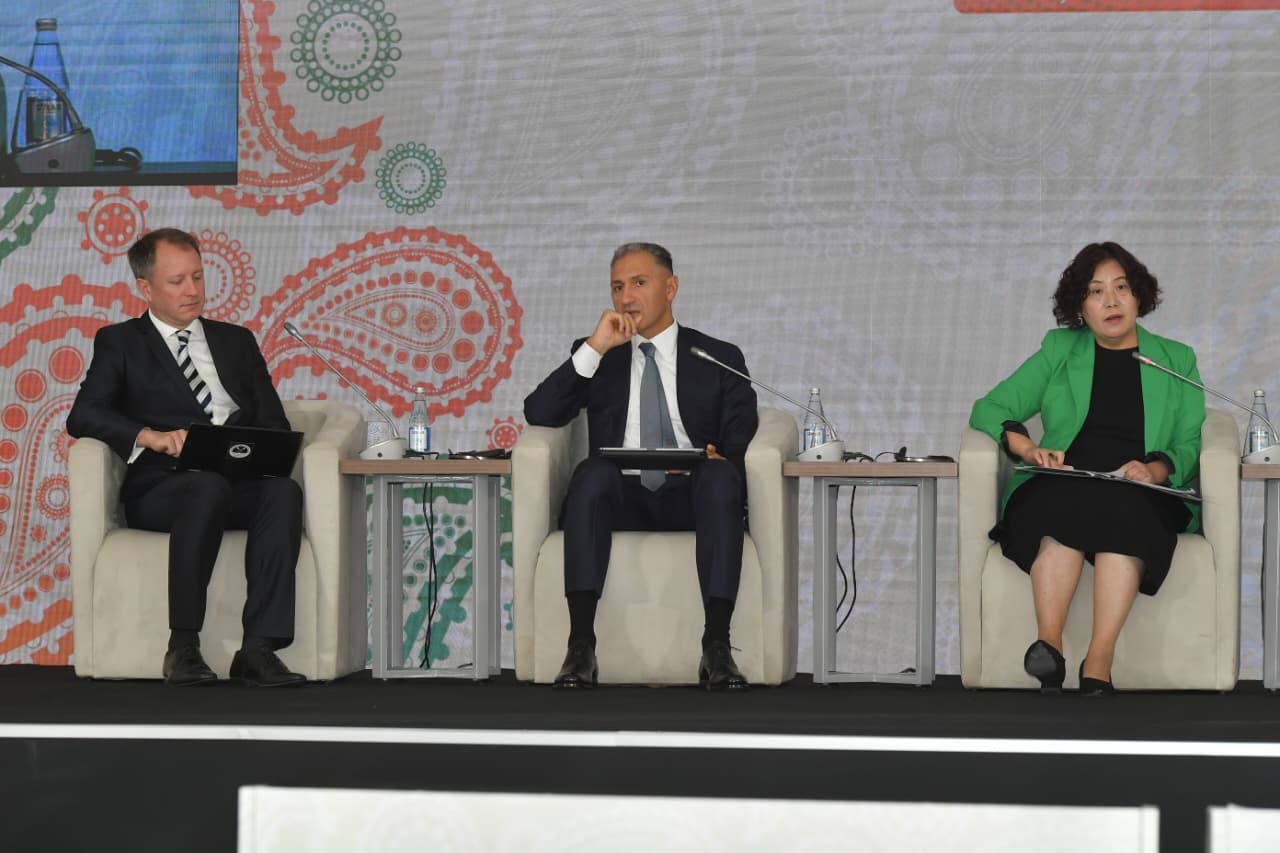
Moderated by Tobi Gregory from Euronews, the panel featured remarks from Rashad Nabiyev, Minister of Digital Development and Transport, who emphasized Azerbaijan’s significance as a key transit hub providing access to global markets. He highlighted the importance of creating new connectivity opportunities in the South Caucasus and Central Asia under the “Belt and Road Initiative” for regional stability and development. Nabiyev noted that diversifying transportation routes between the East and the West is strategically vital, emphasizing the key role of the Middle Corridor and the Zangazur Corridor as one of its main arteries.
Other panelists included Fariz Rzayev, Deputy Minister of Foreign Affairs; Orkhan Zeynalov, Deputy Minister of Energy; Lu Mei, Ambassador Extraordinary and Plenipotentiary of the People’s Republic of China; Rolande Pryce, Regional Director for the South Caucasus at the World Bank; Raffaele Marchetti, Director of the Center for International and Strategic Studies at LUISS University; Matthew Bryza, former U.S. Ambassador to Azerbaijan; and Marcos Troyjo, former President of Brazil’s New Development Bank. They shared insights on the strategic importance of the South Caucasus and Central Asia in the context of global changes, the growing potential of these regions in international relations, and how infrastructure, energy, and transport projects promote transregional integration.
The session consisted of two parts, “Transnational Road for Peace and Prosperity (TRIPP)” and “The Role of the South Caucasus and Central Asia in the Global Scenario.” Nuriel Rubini, CEO of Roubini Macro Associates and renowned economist, spoke during the session. He discussed the role of macroeconomic stability, good governance, financial capital, and diversification in economic development, the synergy between technology and energy, and the impact of both traditional and clean energy sources on economic diversification. He noted that the South Caucasus and Central Asia play a strategic role in the new multipolar global economy by serving as a bridge between Europe and Asia. The TRIPP initiative is not only a tool for economic integration but also an important mechanism for strengthening regional peace and prosperity.
 October 05, 2026 16:32
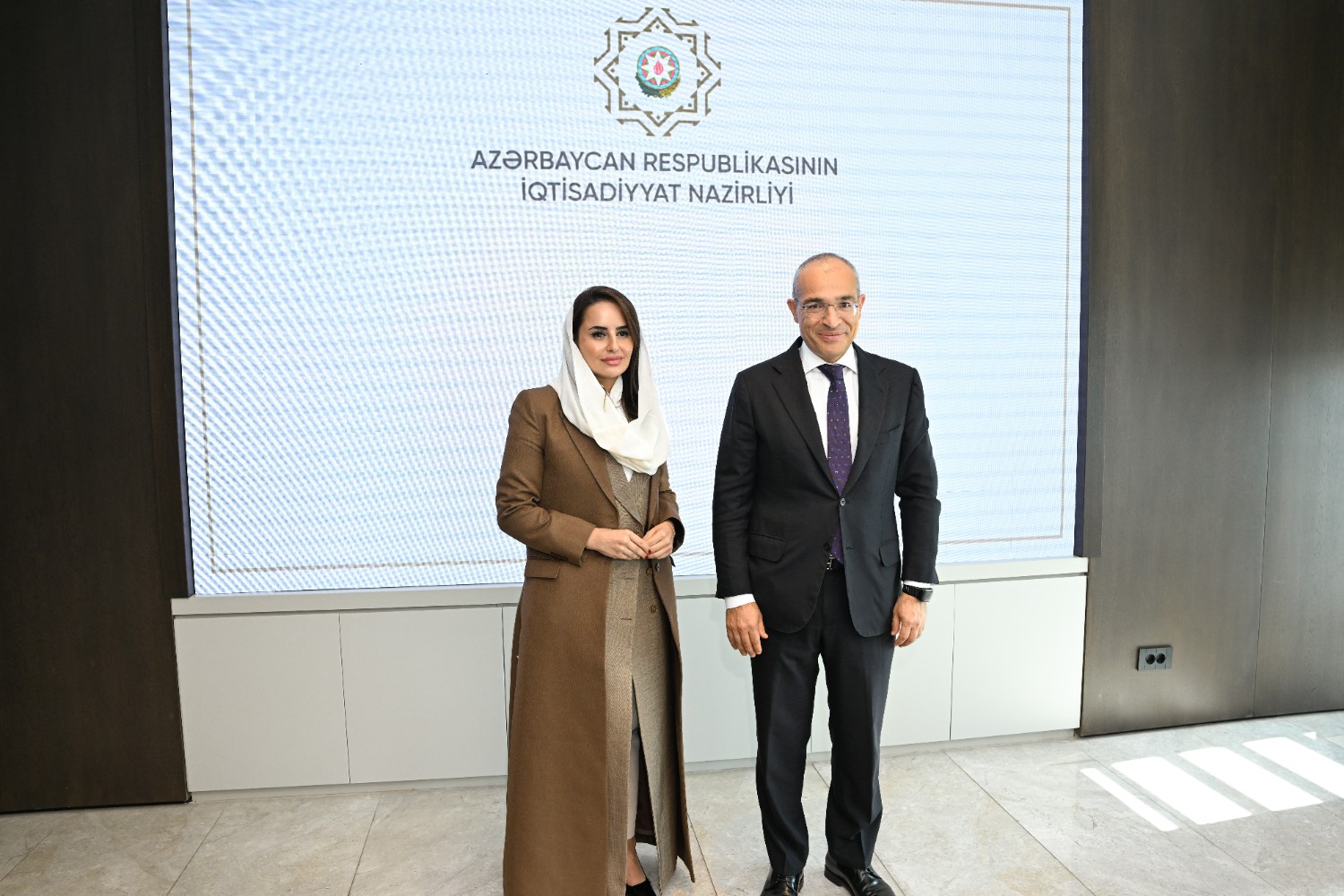
Minister of Economy Meets with Secretary-General of the Digital Cooperation Organization
October 05, 2026 16:32
Minister of Economy Meets with Secretary-General of the Digital Cooperation Organization